Showing posts with label Victorian history factoids. Show all posts

Wednesday, August 6, 2008

That Little Dickens!


From Channel 4's Victorian Passions website:

"Born in Portsmouth in 1812, the young Charles Dickens should have had a safe and secure childhood on his father's wages as a navy pay clerk. But John Dickens was plagued by money troubles. This culminated in 1824, when he was arrested and imprisoned for debt.

The young Charles, possibly on the very day of his twelfth birthday, was immediately sent to work, sticking labels on pots of shoe blacking in a rat-infested warehouse on the banks of the Thames. He earned a mere 8 or 9 shillings a week, visited his family in prison at weekends, and had, as he later put it, 'to undertake the whole charge of my own existence'."....

In 1857, acting in a play by his friend and novelist, Wilkie Collins, Dickens met and fell in love with an actress, Ellen (or Nelly) Ternan (pictured). She was 18 he was 45. Their meeting was to spark the most extraordinary and explosive mid-life crisis in Dickens and to change both of their lives for ever. In a matter of months, Dickens broke up his marriage of twenty years, quarrelled with many of his friend and began a relationship with Nelly that led to a double existence for the remainder of his life.

The secret lover
Although he never publicly acknowledged her (except briefly in his will), Ellen became the centre of Dickens' emotional life until his death in 1870. We still do not know for certain whether it was a sexual relationship or not, but it is quite possible that they had a child (or even children) together, although any hard evidence of this, and of so much else about their relationship, has been lost or destroyed.

Sunday, August 3, 2008

Richard Francis Burton


Richard Francis Burton (1821-1890)

English explorer, translator, writer, soldier, orientalist, ethnologist, linguist, poet, hypnotist, fencer, diplomat ...


best known exploit
... travelled to Mecca in disguise


unexpurgated translation of The Book of One Thousand Nights & a Night (more commonly called The Arabian Nights abridgement) and the Kama Sutra

Controversy ...
  1. wrote about sex & sexuality = full of details; especially about the details of the sexual lives of those individuals where he travelled
  2. wrote about sexual techniques where he travelled (hinting he participated)
  3. broke sexual & racial taboos of the day
  4. Kama Shastra Society
  5. General Sir Charles James Napier had Burton go undercover to investigate a male brothel frequented by the soldiers
  6. accused of murdering a boy that caught him"urinating like a European" on trip to Mecca (exposing his true identity and putting his own life in jeopardy)


~ from the notes of Lady Victorian Historian

Thursday, July 31, 2008

The Revival of the Cult of Domesticity


Just what we all need: another cult... The Bible-based teachings of the great patriarchy movement are not cultic enough for them... They have to prop them up with the ideology of culture, since it has more to do with culture than it does with Christianity.

They can't even come up with anything original. It's all Pre-Civil War retread.


From The Nineteenth Century "Cult of the Lady"


The nineteenth century, most of which historians have designated as the Victorian Age, was an era in which the idealization of women was developed into an art. No longer were women enjoined to simply live out their lives in dutiful labor for their families. Instead, an intricate and complicated ideology promoting the sacredness of hearth and home developed and came into its own during the years between 1830 and 1860. Women's lives for the rest of the nineteenth and on into the twentieth centuries came to be defined by and compared to this idea.

Women's fashions and the "cult of the Lady" reflected this ideology of domesticity. Although only wealthy women could aspire to be truly fashionable, the development of periodical literature which specialized in the "female concerns" of fashion, etiquette, and the home came to disseminate the current mode to an ever increasing and literate audience. Furthermore, these magazines, such as Godey's Ladies Book, presented the domestic ideal to which many aspired but only the upper and middle classes could actually attain.

Sometime during the late 1820's and early 30's, "Home" became the catchword of the day. Home became the haven from the rough world for men and children and was maintained by the smiling demure thing in spreading skirts and with folded hands. In her book on the developing technologies of housework, Ruth Schwartz Cowan remarks that the whole transition into industrialized society had a great impact upon the behavioral, moral, emotional, and political consequences of the ideology of the home. She concludes:

`Home' came to be associated with a particular sex, `women'; with a particular emotional tone, `warmth'... and with a particular form of behavior, `passivity'; while at the very same time, `work' became associated with `men', `hardheartedness', `excitement', `aggression', and `immorality.'...

...Although "cult of domesticity" is generally attributed to the Victorian era, it was no longer quite as prevalent in the years following the Civil War. Social upheaval moderated in varying degrees the adherence to the ideology. Although many women still thought of themselves as ladies, the woman of the "Gilded Age" was no longer tied to the home in the same way her sister of twenty years before was. By the late 1860's, the fashionables gave up their spreading skirts for bustles and the curiass form which delineated the female figure to a degree not seen since the 1810's.

The "cult of domesticity" and the "lady" provided a sense of security for many nineteenth century Americans. In that rapidly changing industrial era, the engendering of a safe haven guarded by a quiet female seemed the epitome of security. The raising of this vision to an ideology uplifted the mundane domestic duties of the housewife to a realization of the beauty of women's seperate sphere. Although in order to live this life a woman needed to be supported by a man, her task of providing a home elevated her social role. Indeed, by her very words, actions, an d dress, she could convey the status of her family. The "cult of domesticity", though it was pervasive in the thirty years before the Civil War, became an integral part of the history of women in America.

READ the full ARTICLE HERE.

Tuesday, July 29, 2008

Victorian Truth Telling on the BBC

Channel 4 has a new programme for the fall, and I understand one aired in June. If you live in the UK, you can watch at least one full episode online, but we slugs on the other side of the pond cannot yet get access to all of these British shows yet...

From the Channel 4 website about the series "Victorian Passions":


Victorian Passions is a season of four films set to challenge our image of Victorian Britain as a buttoned up, prudish and unsmiling society.


From Queen Victoria's own passionate relationships, to the story of Arthur Munby and his servant lover, these films lift the lid on another side to Victorian life and challenge some of our long-held myths.


About the episode discussing Queen Victoria:

Victoria’s Men presents a seldom-seen side of Queen Victoria, both in childhood and then as a young queen. Through diaries and letters it explores the way her early life shaped the intense and complex relationships she was to have with men throughout her political and private life.

The real picture of Victoria could hardly be further from the dowdy, buttoned-up and forbidding image of the popular imagination. An intensely romantic wife as well as a fierce and effective politician, the programme highlights how Victoria both loved men and needed to be loved by them in return, not only as a queen, but as a woman in her own right. And privately, she revelled in her sexuality.

The potential scandal of some of her relationships set her on a collision course with her Royal court, family and public and at times plunged her monarchy into crisis. But it was one man, Prince Albert, who dominated her life during 21 years of marriage and the 40 years that followed his death.

Friday, July 25, 2008

The Myth of the Victorian Patriarchal Family


if anyone is interested, I would like to recommend the following ...

The myth of the Victorian patriarchal family, by Eleanor Gordon (a Department of Economic and Social History, University of Glasgow, 4 University Gardens, Glasgow G12 8QQ, Scotland, UK) and Gweneth Nair (Department of Applied Social Studies, University of Paisley, Paisley UK)

It has been available online 22 January 2002

The Abstract on this study is as follows ...

Conventionally, the Victorian middle-class family has been regarded as a social and economic unit usually headed by a married man. The woman's role within this unit has been associated with service and dependency.

However, a study of a middle-class area of Glasgow based upon the census returns of 1851–1891 suggests that the widely held image of the Victorian middle-class family as headed by a paterfamilias may be misplaced. The high incidence of female-headed households and the range of kin, both male and female, which they contained, indicate the diversity of experience among middle-class women, the degree of their social and residential independence, and, thus, the dangers of viewing women's lives through the filter of Victorian domestic ideology.


again ... this whole myth around a woman and her role in the Victorian Era is simply that ... a myth ... it never existed
I can give several examples from my own family and that of my husband's family during the Victorian Era that dispel these myths ... these women were NOT that unusual ...
~ from the notes of Lady Victorian Historian

Revealing Necklines for Women and Effeminate Clothing for Boys (by today's standards)


Victorian Necklines

even the gowns of the upper class during the Victorian Era was too revealing! (in my opinion ... you do not have to agree)

Egads ... haven't these folks looked at those gowns!?!?

From Fashion-Era:

All this exposure was restricted to the upper and middle classes. Victorian working class women would never have revealed so much flesh. The décolleté style meant that the shawl became an essential feature of dresses. In the early Victorian years time corsets also lost their shoulder straps and a fashion for producing two bodices, with a closed décolletage for day and a décolleté one for evening.


may be their definition of modesty and mine are two different things

I perceive the gowns in the Victorian Era of the wealthy to be very, very, very revealing!


Effeminate Dress for Boys

there are some that want to crucify some women for wearing slacks today, but in the Victorian Era, little boys were clothed in dresses!

many little boys of the Victorian Era appear feminine by today's standards

out West there were many women that wore slacks simply because it made more sense in doing the work that they did


~ from the notes of Lady Victorian Historian

Victorian Boys Wore Dresses and Had Long Hair

From "Commonly Held Misconceptions about Historic Costume" from "The Clothesline" website:

Why did they dress little boys like little girls?

Though adult roles were extremely gender specific, small children's clothing was not...

Many images of small boys from the Victorian period and earlier appear feminine by today's standards. Some images show young boys in dresses almost identical to those of girls... Boys' clothing was not dissimilar to women's fashions of the nineteenth century. It was not unusual in the nineteenth century for small girls to wear bloomers, or pants beneath their dresses as well...

Like many other aspects of dress, the visible implicators of masculine and feminine have changed over time. The color schemes we associate with the identification of an infant's gender did not develop until the early to mid twentieth century... Finally, the use of pants for infant and toddler boys could create additional difficulties as fasteners commonly used today (snaps, zippers and velcro) were not available until the twentieth century. In the time before a child was potty trained, dresses would provide cover and access to diapers.

Until recent decades parents were not as concerned with declaring a child's sex... Gender would not need to be advertised to others who most likely knew the parents and the gender of the child already.

Beliefs about the nature of children also supported the idea that children developed personalities and individual traits as they grew, but were not necessarily born with them. Until babies grew into toddlers (2 or 3 years old) gender would not play a role in their lives. This may have been partially due to the high rates of infant mortality. This lack of individuality may have been a form of psychological protection for parents facing the likelihood of losing infant children.


Read the entire "Myths" online article here.


[Note: This blog host has an old photo of her grandfather wearing a dress and with long hair! He grew up to be very masculine: a coal, clay and sulfur miner; and later a welder. No gender ambiguity whatsoever!]

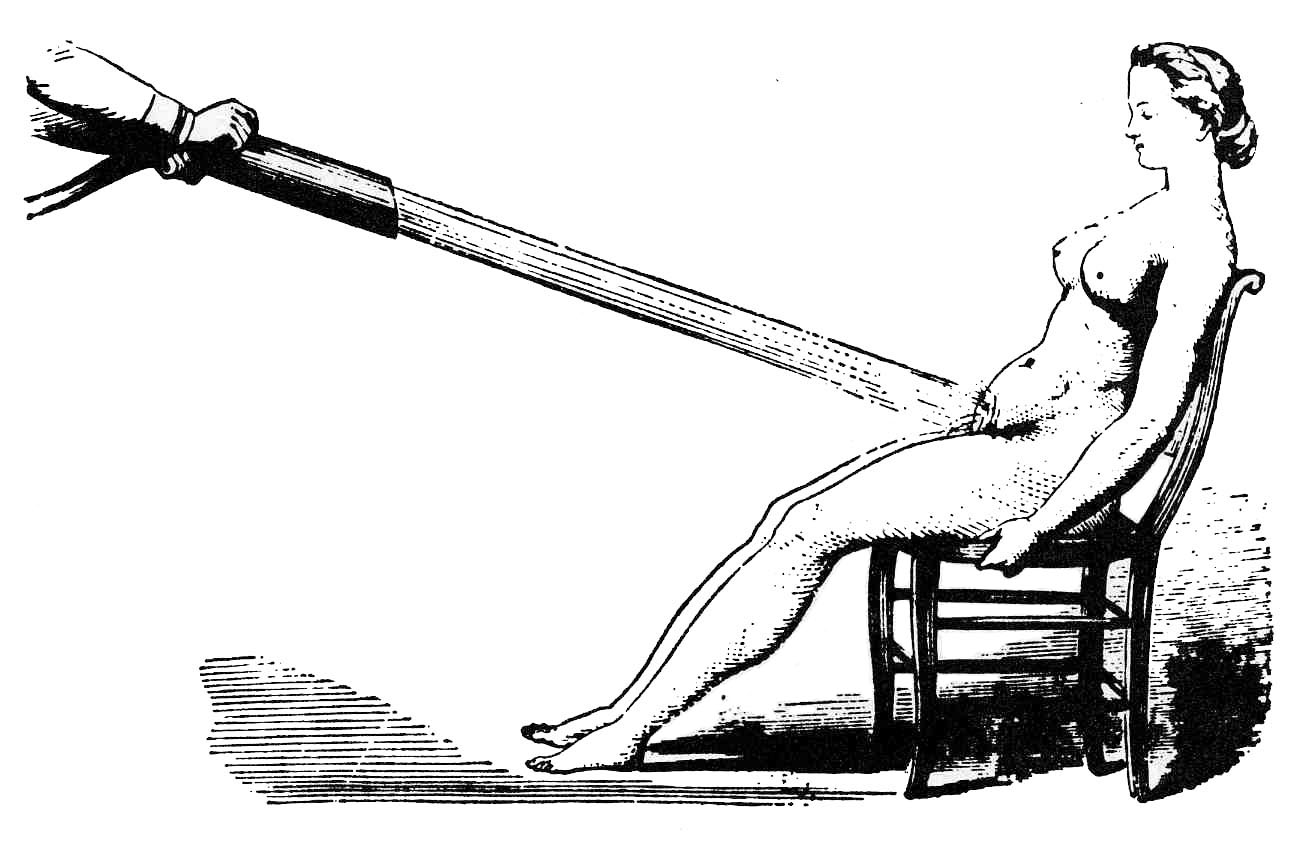
Female Hysteria: Help from the Sears Catalogue

Female Hysteria


This was once a common medical diagnosis for women. Mesmer did quite a lot of business with women, some of which approximates what some people call "Therapeutic Touch."


female hysteria is from the Greek idea of a "wandering womb seeking its proper place"


symptoms = faintness, nervousness, insomnia, fluid retention, heaviness in abdomen, muscle spasm, shortness of breath, irritability, loss of appetite for food or sex, and a "tendency to cause trouble"

is it any wonder that the reproduction rates declined during this era especially as the medical and marital advice = passionless women as ideal????

most of us are more familiar with this whole phenomenon because of the fainting couch and women having "the vapors" ...

when I first heard of fainting couches as a young girl, I remember thinking, "wow ... that is so cool!" ... I love furniture anyway so when I saw my first fainting couch that just cemented my love for furniture even more ... here was a piece of furniture JUST for women (like men had the triangle-shaped stools & chairs to accomodate the swords they wore at their sides)


this issue is a very touch and potentially VERY embarrassing issue for me to present ... so I will not go into great detail ... if you are interested, I would recommend you researching it yourselves when your children and husband are NOT in the room ...


If you opt to research, remember ... women during this era constantly had to go to the doctor for "women troubles" ... you may want to research this area as well as the above


"Why is this timeframe so looked upon and really REVERED in some Christian circles as the " end all be all" of modesty and enlightenment?"

... I simply cannot fathom that ... to me, rightly or wrongly, it is a very wicked and immodest
time frame


~ from the notes of Lady Victorian Historian

The Victorian (Non)Sensibilities of Bill Gothard


In 1974 Dr. E. Robert Jordan (Chancellor of Calvary Baptist Theological Seminary at the time) did a 22-page comprehensive analysis of Gothard's ministry which gave 15 reasons Why Fundamentalist Baptists Should Not Cooperate With Bill Gothard's Institute In Basic Youth Conflicts.

Gothard seems to move from experience to doctrine, from illustrations to principles resulting in full-blown teachings. There are HUGE problems with this ... but again, it also reflects some of the problems the visible church was having during the Victorian Era.

• Sex Scandals & the Victorian Era

I think you raise a very interesting correlation whether it was intended or not—i.e., the connection between how some present a very low view of women (twisting Scripture in order to do so) and sexual scandal... this, too, was very common during the Victorian Era ...

... there have also been huge sex scandals with Gothard and his brother ... again, very reminiscent of the Victorian Era's need to place everything under rules/regulations (only for those that could afford them & not the rest of us) and sex scandals

this is exactly what was happening during the Victorian Era


• Don't need to be Christian ... another area representative of the Victorian Era ...

The need for Christianity at these seminars was not an imperative. These principles apply to all: Jews, Christians, and Atheists said the St. Paul Dispatch on 26 April 1974.

Many at the time (I dunno about afterward) claimed that he was substituting his laws (i.e., Gothard's rules) for what the Bible said.


• Occult connection? another area reflecting the Victorian Era ...

I have heard some say Gothard's "Pre-Birth Training" borders on the occult. During the Victorian Era, the occult was making a re-appearance again ... even respectable Christian families of the Victorian Era were toying with the occult.

Also, there appears to be a connection between Gothard and Dr. Michael Ballam, a Mormon, whom I have been told is heavily influenced by New Age principles and pop psychology. Some of the stuff that Ballam promoted was occultic themes in "planetary vibration tones" and more . Ballam, apparently, held that Christ was simply a person that could channel power and/or energy in order to do His miracles. The Victorian Era was not that blatant, but basically implied Ballam's stuff via Spiritualism.


• Medicine connection to Victorian Era ...

Most of us are familiar with the Snake Oil man selling his potions out West during the Victorian Era. Dorothy in the Wizard of Oz deals with one (even though the movie had the setting in the 1930s). I have been told Gothard qualifies himself for giving out medical advice and undermines medical doctors that could cause life-threatening problems. Apparently in his January, 1996 Basic Care Newsletter Gothard told his followers that Cabbage Patch and Troll dolls in the home prevented birth & once thes offending dolls were removed, the women became PG! This whole thing borders on paganistic superstitution! His whole medical advice borders on mysticism which was very prevalent in the Victorian Era.

The Victorian Era also viewed illness in a very superstitious way with all health issues believed to be brought on by a spiritual cause. This is also reflected in Gothard's preference for natural cures and discouragement of traditional medicine as a first option for illness. Spiritual cause should be considered first. This is reflected in Henry Wright's book. It is nearly identical to the New Age views of people like Louise Hay.


confusion between true intimacy and marital relationships ...

Just like the Victorian Era, Gothard seems to confuse true intimacy (sharing thoughts, feelings, life experiences, etc.) and marital relationships. In the Victorian Era, the medical advice at the time told women and men they were not to enjoy each others company (in the Biblical sense) in marriage (which was probably why there was a need for so many prostitutes ... ). To Gothard, his view of love is cold and chemical ... which is understandable because it is my understanding that he has never been married. I never get the impression that males/females are to give each other their hearts in a marriage.


• legalistic rules ...

My brief exposure to Gothard definitely left me with the impression that he was similar to those from the Victorian Era with respect to having the need to have legalististic rules & regulations never found in the Bible. When discussing this with my mom's parents who where children of the Victorian Era, they would just shake their heads. If you follow certain rules, everything is okay. There seems to be no need for internal motivation. I remember huge discussions on this after attending that seminar in my family and tons of compare/contrast techniques with that seminar and the Pharisees.

It seems to me that he disputed Scripture's definition of grace as unmerited favor. I would have to go pull out my stuff from the attic to be sure. I can tell you I went away from the seminar thinking he thought it was necessary to follow certain rules/regulations in order to earn favor.

~ from the notes of Lady Victorian Historian

Comparing the Frontier Victorians with the Fragile Femmes


Victorian Healthcare

1st: Only the "rich" could afford to go to the doctor

2nd: Many considered doctor appointments a point of prestige

3rd: From the various accounts I have read, husbands did not care


To me ... rightly or wrongly ... these visits to the doctor were ... uh, er, uhm ... a type of promiscuous behavior that was condoned by society (rightly or wrongly I consider the treatment at the time promiscuous behavior) [Based on how society viewed things then]

It would seem that there really is a correlation between physical/emotional/sexual abuse and poverty...

(no matter what culture, time frame, or society)

being poor promotes stress ... fear ... worries ... major problems

some folks respond to issues associated with poverty or perceived poverty with abuse

depending on the degree of poverty ... or the perceived notion of being poor (called "relative poverty") ... and a person's ability to handle stress has (in my mind) a direct correlation to the degree of abuse

I also think it relates to "culture" ... poor women in the cities would frequently physically fight back (cuz it generally meant their lives)


Frontier Women

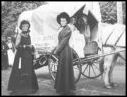
Victorian women in our West could hold their own ... remember, Annie Oakley was not that unusual ... many women had to hunt to provide for their families ... Annie Oakley was only unusual to the extent that she made her living by trick shooting, her connection with Buffalo Bill, and her ability to promote herself in the marketplace

Men thought twice about being abusive to frontier women ... also, many American men truly held their wives in very high esteem and treated them how they would wish to be treated (i.e., Western men tended to not listen to the goofy rules from England or the East ... they were not in to prestige and status like those in the East)

~ from the notes of Lady Victorian Historian

Thursday, July 24, 2008

Famous Disgruntled Youths? Things Were Better Out West!


Jack the Ripper

there are some theories that Jack's spree is related to some of the stuff I have talked about ...

interesting that you have made the connection between Jack and mega-controlling parents ... there is one theory that Jack the Ripper was one of Queen Victoria's sons


Horatio Alger, Jr

one major theory at this point in time that most folks do not realize is the Unitarian author that wrote the Horatio Alger's stories was a pedophile ...

this is not well known because book sales would have slumped off incredibly ... but even these stories had to have a thin veneer of respectability to them

(I have used 2-3 of these stories to point out certain issues to my own children ... like being melodramatic or histrionic is not the way to go! ... I tend not to enjoy drama queens & kings ... anyway, the guy that wrote Horatio Alger did around 119 books ... there are only 4-5 plot lines for all of them ... so, if you have read 1-2 and most definitely 3-4 you will know the plots for all the rest of the stories)


Annie Oakley (a stark contrast!)

from what I have seen, US crime rates were similar ... except out west ... the reason for that is because most women were shooting game to feed their families (Annie Oakley was only exceptional in a couple of areas ... she worked for the wild west show and did trick shooting) ... women out west tended NOT to put up with such nonsense ... more often than not a man would have been too scared to try to physically abuse most women because she could handle herself (thank you very much) ... in fact, out west the gals received the right to vote and hold public office long before the rest of us

Have you read Louis L'Amour stories? (A good place to start)


~ from the notes of Lady Victorian Historian

Sunday, July 20, 2008

Substance Abuse in the Victorian Era


Interestingly, in the Middle Ages, the Church denounced everything and anything “eastern” as the “devil’s work” which meant drug addiction was extremely rare. Monks coming back from the Crusades found new uses in how to use drugs in helping the sick, but it would seem that was as far as it went.

The Victorian Era, however, had major problems with rampant drug abuse and alcoholism. Drugs like heroin, chloral, and laudanum were available and widely prescribed. The rapidly expanding British Empire brought drugs used from other lands into the country and, as a result, to the USA.

Common Drugs

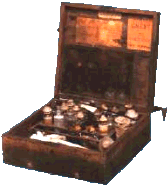
Laudanum — a mixture of alcohol and opium derivatives ... common item included in the medicine kits of many proper Victorian families

Alcohol was easily produced and distributed ... these beverages were used to alleviate a host of ailments ... epilepsy, gout, kidney stones, colic, fever, headaches

The high use of barbiturates and depressants may indicate difficulties coping with the rigid social order.


OPIUM

1839: Opium Deaths
Opium and its preparations are responsible for more premature deaths than any other chemical agent. Opiates account for 186 of 543 poisonings, including no fewer than 72 among children.

18 March 1839: First Opium War
Lin Tse-Hsu, imperial Chinese commissioner in charge of suppressing the opium traffic, orders all foreign traders to surrender their opium. In response, the British send expeditionary warships to the coast of China, beginning The First Opium War.

1840: New England Imports Opium
New Englanders bring 24,000 pounds of opium into USA. US Customs promptly put a duty fee on the import

1856: Second Opium War
Britain & France win. Opium production increases.


HEROIN

.[source: http://drugs.uta.edu/drugs.html] ...

Heroin was a brand name coined for the bonding of morphine, opium's active ingredient, with acetic anhydride, a common industrial acid. The name was supposed to refer to the heroic, fearless and painless, sensation users felt after using it. It was discovered by a British chemist in 1874, and first mass produced by German pharmaceutical Bayer in 1898.

Drug abuse and drug problems were blamed on foreigners.

Be sure to check out ...
This site is dedicated to an investigation of the uses and abuses of drugs and alcohol within Victorian society. In particular, it investigates the role of drug and alcohol use in the production of art and literature and how drug and alcohol use gets represented in the literature and art of the period.


Famous Victorian Drug Addicts

Elizabeth Eleanor Siddal (1829–1862) = British model, poet, artist = addicted to laudanum ... 1st PG stillborn due to addiction ... 2nd PG Siddal overdosed ... Rossetti found her unconscious and dying in bed ... some say she left a suicide note that the doctor told Rossetti to burn
• poet & painter Dante Gabriel Rossetti (1828-1882) addicted to chloral hydrate

Elizabeth Barrett Browning (1806-1861) = lifelong addict (started in childhood to treat spinal tuberculosis) ... had miscarriage because of abuse

Samuel Coleridge (1875-1912) ... addicted to laudanum most of life ... the Royal Institute commissioned Coleridge to give a series of lectures in London... his use of opium caused him to cancel scheduled appearances

Percy Bysshe Shelley (1792-1822) suffered raging laudanum-induced hallucinations

John Keats (1795-1821) suffered from cocaine, heroin, alcohol addiction

Lewis Carroll (1832-1898) some say the inspiration of Alice in Wonderland came from his substance abuse hallucinations

• laudanum addict = novelist Charles Dickens (1812-1870)

• laudanum addict = novelist Wilkie Collins (1824-1889)

Charles Tennyson (brother of Alfred Tennyson) was an opium addict (his poem Silkworms and Spiders alludes to his addiction)


• some say Oscar Wilde abused opium as depicted in the decadent life-style in The Picture of Dorian Gray

Edgar Allan Poe (1809-1849) suffered from opium and alcohol addiction

Mary Todd Lincoln (1818-1882) ... misprescribed laudanum for sleep problems ... it caused anxiety & hallucinations ... because she experienced an increase of hallucinations, she was prescribed more laudanum & chloral hydrate which increased the problem leading to her eventual commitment to an asylum

The Average Joesphine ... laudanum prescribed for menstrual cramp relief and vague aches ... spoon fed to infants

1883: J. B. Mattison (American doctor) suggested 30%-40% of American doctors were addicted


[Source: Morphine-Addicted Doctors, The English Opium-Eater, & Embattled Medical Authority by Barry Milligan of Wright State University, 2005, Cambridge Journal, Cambridge University Press)

~ From the notes of Lady Victorian Historian

The Self-Righeous Victorians


Martin Luther's (1483-1546) statement ...

‘Sin doesn’t harm us as much as our own righteousness.’


The Victorian Era seems to embody self-righteousness ... they made up all these crazy rules & regulations

It was a cookie-cutter type of Christianity that was in many respects becoming irrelevant to the world around them and society at large


I keep hearing Christ's words in my head that he that would be first shall be last


REAL Christianity ... however ... is never irrelevant (at least in my opinion)


~ says Lady Victorian Historian

Victorian Era: The Golden Age of Poisoning


Many consider the Victorian Era as the
Golden Age of Poisoning.

Poisoning was an easy form of murder to get away with because it could be done in secrecy. Moreover, the proof necessary to convict someone in a court of law tended to rely on circumstantial evidence.


It was a popular homicide weapon because ...

• poison was readily available to the common person
• there was a new incentive called life insurance
• it produced little evidence — no marks, blood, or noise
• it could be done in secrecy
• evidence for poisoning was circumstantial in court of law

Some say poisoning was a common female defense against abusive husbands. During this era, approximately forty women were tried for poisoning their husbands. Then, as now, folks new this number was very underreported. As a result, Parliament restricted poison sales in 1851.

Poison most often used = arsenic

• arsenic use in rat poison & used in most homes
• women used arsenic for cosmetic purposes
• no one asked questions when a woman got arsenic from a shop in town
poison examples:

• Belle Gunness = long line of disappearing (rich) suitors found buried all over her farm = used arsenic with great gusto

• Madeleine Smith, an aristocratic young Glasgow woman, accused of poisoning lover with arsenic

• Thomas Young

• Donald Harvey = killed with cyanide

• Dr Harvey Crippen ... Even though this case was shortly after the Victorian era, it still had a Victorian committing the murder. He was married to Cora Turner but having an affair with his secretary, Ethel Le Neve. Cora disappeared. His mistress moved in with him and began to wear his wife's jewelry and clothing. Raised suspicion. Police began to investigate. Crippen panicked & moved to Canada. He almost got away with murder.

The Golden Age of Poisoning during the Victorian Era was the reason why toxicology as a field of medicine developed. As a science, toxicology became increasingly important ...


~ from the notes of Lady Victorian Historian

Christian Women's Temperance Movement


The Victorian Era had an unrealistic and idealized vision of a family which led to and/or exacerbated a great many social ills. Opium use by females was considered “genteel” and “feminine” while public intoxication was deeply frowned upon.

[Note: As I documented earlier, the Victorians were well aware of the many problems associated with opium usage.]

Some went so far as to sterilize those that habitually consumed alcohol. In an 1897 Medico-Legal Society gathering, a Brooklyn doctor recommended women "be desexualized ... whether maid or matron” if they failed to respond to treatment.

[This practice was continued in the eugenics movement which emphasized the sterilization of “the unfit” & was picked up on by the Nazis approx. 33 years later in the 1930s]

The Women's Christian Temperance Movement was a Christian-based group. President Francis Willard, in 1874, began to push for prohibition. Earlier Temperance societies wanted to "temper" those using alcohol to socially accepted levels of alcohol consumption.

Problem: The more Christian women began to get involved in the issue, the more they realized how much women were being physically abused by their alcohol induced spouses leaving scares on their bodies and more.

1888: Dr. Lucy Hall studied 204 women under her care at the Reformatory Prison in Sherborn, Massachusetts. The majority began drinking before the age of 21 & over 1/3 of the married women had scars on their heads as a result of beatings from their drunken husbands.

Francis Willard, a brilliant strategist, pushed for prohibition. It is no coincidence that the 19th Amendment (prohibition) and the 20th Amendment (women's vote) passed within a year of each other. Her group was a major force behind prohibition, banning prostitution, and recreational drugs.


~ from the notes of Lady Victorian Historian

Why Idealize the Victorian Era?

... they only reason why folks could possibly put the Victorian Era on a pedestal is because ...

• they don't know any better
• poor education
• do not know history
• have an agenda


~ says Lady Victorian Historian

Substance Abuse Noted in Camp Songs of the Civil War

The following music CD contains a collection of songs & melodies well known to the troops on both sides of the War Between the States & is played on authentic instruments of the period

Southern Soldier © 1997
Favorite Camp Songs of the Civil War by the
2nd South Carolina String Band


old mailing address for them:
2nd South Carolina String Band / Kershaw's Minstrel Band
1820 Old Harrisburg Road,
Gettysburg, PA 17325

The jacket inside the CD cover states the tune, Rock the Cradle, Julie...

Pvt. James Dinkins, of Co.C, 18th Mississippi, described the march of McLaw's Division—which included Kershaw's South Carolina Brigade—toward Sharpsburg in September of 1862. Dinkins recalled, "The men moved along at a lively gait. As night came on, we sang all kinds of plantation songs, 'Rock the Cradle, Julie', 'Sallie, Get Your Hoecake Done', 'I'm Gwying Down the Newburg Road', and so on. The men ... moved along the road. The woods rang with their melodies." It was this vivid scene which inspired us to produce this album. The melody, the familiar 'Soldier's Joy', has been traced back to traditional Scottish fiddle tunes.

Part of Rock the Cradle, Julie lyrics state ...
Its 25¢ for the morphine,
Its 15¢ for the beer,
Its 25¢ for the morphine,
Lord drink me away from here!


Both sides would have been very familiar with this tune and sung it. Drugs were sold to get high within the camps of the soldiers ... both north and south


~ from the notes of Lady Victorian Historian